Welcome to Damned Connecticut, home for everything curious, weird, odd or unexplained here in Connecticut, from haunted places and unusual spots to strange legends, offbeat news, and of course, paranormal happenings.
The Top Haunted Places in Connecticut
Okay, let’s have a little fun here — people love Top 10 lists (that’s why Letterman still has a show, right?) so here are some of the most popular haunted places in the state as determined by the visitor traffic on our website and my general knowledge of Connecticut. If you’re looking for Connecticut ghosts and paranormal activity, look no further! And if you want to read more, just click through for extended stories about these places.
The Top 10 Haunted Places in Connecticut
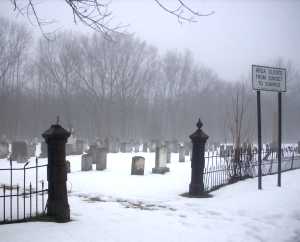 1. Union Cemetery, Easton— The home of the infamous White Lady, this 400-year-old grave yard has been popular with ghost hunters for decades
2. Dudleytown, Cornwall— If you were going to rank the most famous of Connecticut’s haunted places, you could say Union Cemetery and Dudleytown are 1 and 1A. Once declared “the most haunted place in Connecticut
3. Remington Arms, Bridgeport— Thanks to the constant repeats of Travel Channel’s “Ghost Adventures” investigation, this has become one of the most popular haunted sites in the state. A former munitions factory in the heart of Bridgeport, the property — which has seen its share of tragedy and death
4. Fairfield Hills State Hospital, Newtown – The first of a trio of former abandoned “insane asylums” on the list, Fairfield Hills was closed by the state in 1995, and in the ensuing years has grown into a popular destination for ghost seekers as well as urban explorers. Like many former hospitals for the mentally disturbed, tales of cruelty and abuse surround the facility, which when combined with stories of odd happenings in the network of underground tunnels here
5. Seaside Sanatorium, Waterford— Another former “unrest” home for those seeking mental convalescence that has been abandoned by the state of Connecticut and is now in serious decay. A once-beautiful Cass Gilbert-designed edifice overlooking Long Island Sound, the sanatorium was built with the idea that the peaceful view would provide remedy. Unfortunately, patient abuse and a high suicide rate resulted instead
6. Norwich State Hospital, Preston— The third member of the neglected state facility trio, Norwich is in lockstep with the others: long history of reported patient abuses and torment, closed down by the state a few decades ago, allowed to rot and fester, resulting in eventual hauntings being reported
7. Bara-Hack, Pomfret – A former 18th-century settlement where all sorts of odd sounds, disembodied voices and laughter as well as supernatural sights have been reported . Like Dudleytown, Bara-Hack is currently on private property, but that (unfortunately) doesn’t stop unwanted visitors exploring the ruined foundations and home remains in search of the spirits of days gone by
8. Little People’s Village, Middlebury— Another place like Dudleytown in that its reputation, although thoroughly debunked (it’s a former roadside attraction, not a home for pixies built by a madman), it still draws purveyors of the paranormal. Aside from the general creepiness that comes with finding a decrepit tiny village out in the woods, there is the “curse” of “The Throne” (sitting on it will bring death within seven years), reports of all sorts of weird lights and the rumor of fairies
9. New London Ledge Lighthouse — Famously haunted by the supposed ghost of “Ernie,” a former lightkeeper, this lonely landmark in New London harbor has been investigated by paranormal groups from around the world, including T.A.P.S., aka “The Ghost Hunters.” A very active site, with all sorts of rappings, moving objects and random noises
10. Gunntown Cemetery, Naugatuck— Even though there is no one particular legend associated with this cemetery that dates back over two centuries, there are all sorts of unusual phenomena that have been reported here. A virtual cornucopia of paranormal activity has been recorded here, everything from EVPs and disembodied voices to ghostly figures and disappearing dogs and children, as well as inexplicable feelings of dread

Everyone knows about the infamous Salem witch trials, but few people realize that Connecticut has an older and arguably more colorful history when it comes to accusations of—and executions for—witchcraft.
Actually, by 1692, when hysteria was just starting to sweep through Salem, nine (or eleven, reports aren’t exactly clear) unfortunate souls had already been executed for witchcraft in Connecticut, including Alse (or Alice) Young, who was the first woman hanged in New England—and possibly the New World—for purportedly having consorted with Satan. Before it was over, 35 people would stand accused of crimes involving witchcraft.
As hard as it is to conceive now, the idea of The Devil walking the Earth and taking an active role in everyday life was a genuine fear in Colonial Connecticut—it’s not a coincidence that there are over 30 places in the state with names that served as a warning to all that The Evil One might be lurking about, including Devil’s Den (five different places), Devil’s Backbone (four), Satan’s Kingdom (two), Devil’s Island, Hell’s Hollow, Tophet Ravine and even a Devil’s Dripping Pan. The early European settlers here were true believers.
The best-researched record of events is John M. Taylor’s The Witchcraft Delusion in Colonial Connecticut (1647-1697), in which he chronicles the known events as well as delves into the causes for the hysteria, including tracing the entire history of witchcraft.
During those times, what is now Connecticut was then divided into two colonies: Connecticut and New Haven. Witchcraft officially became a crime in Connecticut in 1642: “If any man or woman be a witch—that is, hath or consulteth with a familiar spirit—they shall be put to death.” New Haven enacted its witchcraft law in 1655: “If any person be a witch, he or she shall be put to death according to” Exodus xxii, 18; Leviticus xx, 27; Deuteronomy xviii, 10, 11.
In the book, Taylor also uncovers Connecticut’s official “Grounds for Examination of a Witch,” written in the 17th century. [Note: I've updated some spelling for easier reading.]
The Top 10 Haunted Places in Connecticut
1. Union Cemetery, Easton— The home of the infamous White Lady, this 400-year-old grave yard has been popular with ghost hunters for decades2. Dudleytown, Cornwall— If you were going to rank the most famous of Connecticut’s haunted places, you could say Union Cemetery and Dudleytown are 1 and 1A. Once declared “the most haunted place in Connecticut
3. Remington Arms, Bridgeport— Thanks to the constant repeats of Travel Channel’s “Ghost Adventures” investigation, this has become one of the most popular haunted sites in the state. A former munitions factory in the heart of Bridgeport, the property — which has seen its share of tragedy and death
4. Fairfield Hills State Hospital, Newtown – The first of a trio of former abandoned “insane asylums” on the list, Fairfield Hills was closed by the state in 1995, and in the ensuing years has grown into a popular destination for ghost seekers as well as urban explorers. Like many former hospitals for the mentally disturbed, tales of cruelty and abuse surround the facility, which when combined with stories of odd happenings in the network of underground tunnels here
5. Seaside Sanatorium, Waterford— Another former “unrest” home for those seeking mental convalescence that has been abandoned by the state of Connecticut and is now in serious decay. A once-beautiful Cass Gilbert-designed edifice overlooking Long Island Sound, the sanatorium was built with the idea that the peaceful view would provide remedy. Unfortunately, patient abuse and a high suicide rate resulted instead
6. Norwich State Hospital, Preston— The third member of the neglected state facility trio, Norwich is in lockstep with the others: long history of reported patient abuses and torment, closed down by the state a few decades ago, allowed to rot and fester, resulting in eventual hauntings being reported
7. Bara-Hack, Pomfret – A former 18th-century settlement where all sorts of odd sounds, disembodied voices and laughter as well as supernatural sights have been reported . Like Dudleytown, Bara-Hack is currently on private property, but that (unfortunately) doesn’t stop unwanted visitors exploring the ruined foundations and home remains in search of the spirits of days gone by
8. Little People’s Village, Middlebury— Another place like Dudleytown in that its reputation, although thoroughly debunked (it’s a former roadside attraction, not a home for pixies built by a madman), it still draws purveyors of the paranormal. Aside from the general creepiness that comes with finding a decrepit tiny village out in the woods, there is the “curse” of “The Throne” (sitting on it will bring death within seven years), reports of all sorts of weird lights and the rumor of fairies
9. New London Ledge Lighthouse — Famously haunted by the supposed ghost of “Ernie,” a former lightkeeper, this lonely landmark in New London harbor has been investigated by paranormal groups from around the world, including T.A.P.S., aka “The Ghost Hunters.” A very active site, with all sorts of rappings, moving objects and random noises
10. Gunntown Cemetery, Naugatuck— Even though there is no one particular legend associated with this cemetery that dates back over two centuries, there are all sorts of unusual phenomena that have been reported here. A virtual cornucopia of paranormal activity has been recorded here, everything from EVPs and disembodied voices to ghostly figures and disappearing dogs and children, as well as inexplicable feelings of dread
Connecticut Witchcraft Trials
By Ray Bendici | Category: Connecticut Witchcraft Trials
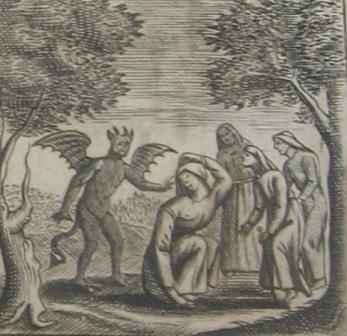
Image courtesy of Connecticut State Library
Actually, by 1692, when hysteria was just starting to sweep through Salem, nine (or eleven, reports aren’t exactly clear) unfortunate souls had already been executed for witchcraft in Connecticut, including Alse (or Alice) Young, who was the first woman hanged in New England—and possibly the New World—for purportedly having consorted with Satan. Before it was over, 35 people would stand accused of crimes involving witchcraft.
As hard as it is to conceive now, the idea of The Devil walking the Earth and taking an active role in everyday life was a genuine fear in Colonial Connecticut—it’s not a coincidence that there are over 30 places in the state with names that served as a warning to all that The Evil One might be lurking about, including Devil’s Den (five different places), Devil’s Backbone (four), Satan’s Kingdom (two), Devil’s Island, Hell’s Hollow, Tophet Ravine and even a Devil’s Dripping Pan. The early European settlers here were true believers.
The best-researched record of events is John M. Taylor’s The Witchcraft Delusion in Colonial Connecticut (1647-1697), in which he chronicles the known events as well as delves into the causes for the hysteria, including tracing the entire history of witchcraft.
During those times, what is now Connecticut was then divided into two colonies: Connecticut and New Haven. Witchcraft officially became a crime in Connecticut in 1642: “If any man or woman be a witch—that is, hath or consulteth with a familiar spirit—they shall be put to death.” New Haven enacted its witchcraft law in 1655: “If any person be a witch, he or she shall be put to death according to” Exodus xxii, 18; Leviticus xx, 27; Deuteronomy xviii, 10, 11.
In the book, Taylor also uncovers Connecticut’s official “Grounds for Examination of a Witch,” written in the 17th century. [Note: I've updated some spelling for easier reading.]